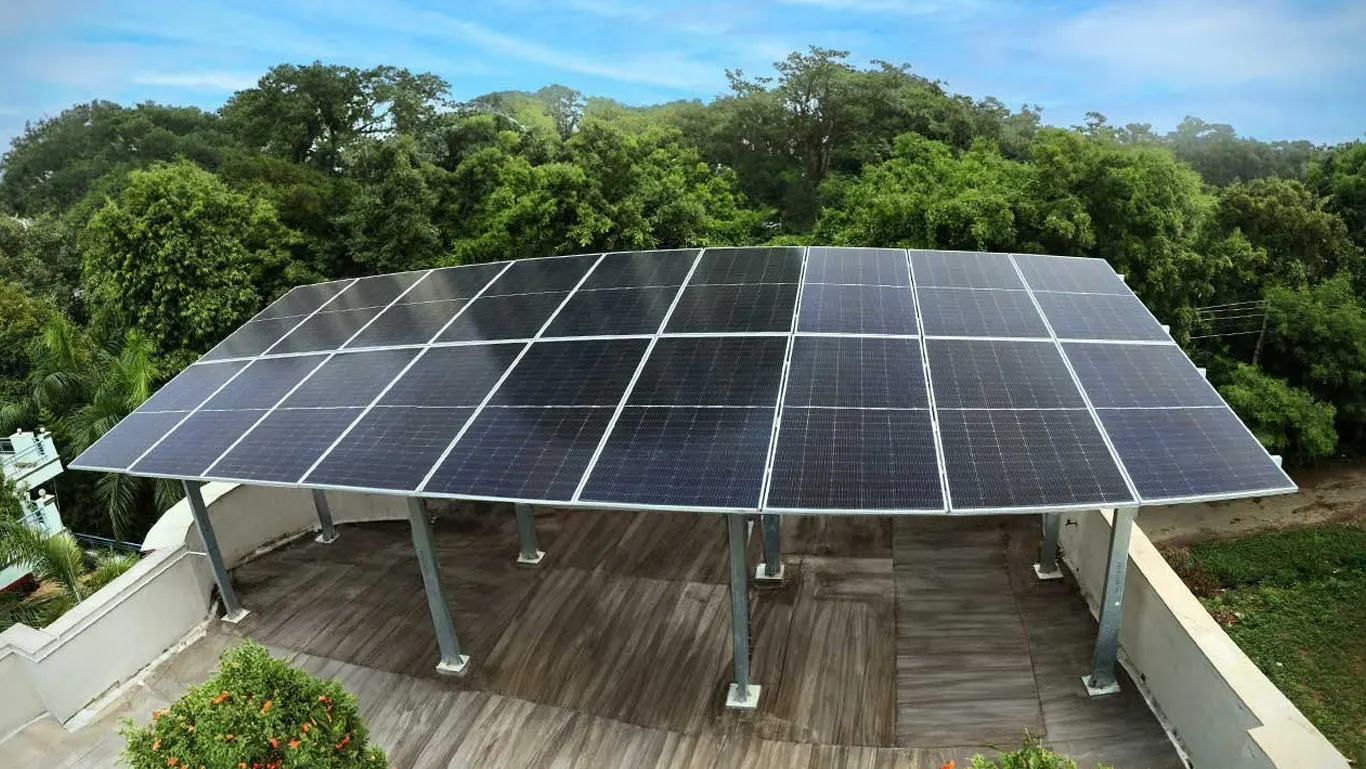
The 3 kW system is the most popular choice for Indian homes: it is the size at which the PM Surya Ghar subsidy reaches its full Rs 78,000, and it comfortably covers a household with a monthly bill of roughly Rs 2,500 to Rs 4,000. The first question is always the same: will it fit on my roof?
The short answer: about 300 sq ft
Plan for roughly 100 sq ft (about 10 sq m) of shadow-free roof per kW. A 3 kW system therefore needs around 300 sq ft, roughly the size of a large bedroom. That allowance includes the spacing between panel rows and room to walk for cleaning and maintenance.
Shadow-free is the key word
A water tank, a parapet wall, a neighbouring building or even a single tree branch can shade panels for part of the day, and shading on one panel drags down the output of the whole string. During a site survey we map the shadow path across the day and position the structure so the panels stay clear. If your usable area is tight, higher-wattage panels can fit 3 kW into less space.
What a 3 kW system generates
Generation depends on your state. At the national average of about 4 units per kW per day, a 3 kW system produces around 360 units a month. In sunnier states like Madhya Pradesh, Rajasthan and Gujarat, output is closer to 390 to 400 units a month. Over its 25-year life the system keeps producing, with a gradual decline that panel warranties cap at defined limits.
Can your roof take the weight?
Rooftop solar with a standard structure loads an RCC roof well within safe limits, and elevated structures spread the load onto columns. Sheet roofs and sloped roofs use different mounting hardware. This is checked during the survey, not something you need to solve yourself.
Check your own numbers
Enter your monthly bill or roof area into our solar calculator to see the system size, cost after subsidy and monthly savings for your home. Then book a free site survey and we will confirm the fit on your actual roof. You can also read what a full system costs in our Madhya Pradesh price guide.