The honest answer to "how much does solar cost" is that it depends on the size of the system, and the size depends on your electricity bill. As a guide, a typical home system in India costs between Rs 1,80,000 and Rs 5,50,000 before subsidy. After the PM Surya Ghar subsidy, most homes pay far less. Below are real turnkey prices, using the same figures we publish on our solar calculator.
Rooftop solar price list (2026)
These are indicative turnkey prices for a standard grid-connected home system: panels, inverter, mounting structure, wiring, installation and net-metering paperwork. The central PM Surya Ghar subsidy is Rs 30,000 per kW for the first 2 kW plus Rs 18,000 for the third kW, capped at Rs 78,000.
- 3 kW: around Rs 1,80,000 before subsidy, about Rs 1,02,000 after. Suits homes with a Rs 2,500 to Rs 4,000 monthly bill.
- 5 kW: around Rs 2,75,000 before subsidy, about Rs 1,97,000 after. Suits larger homes and small shops.
- 10 kW: around Rs 5,50,000 before subsidy, about Rs 4,72,000 after. Suits large homes, bungalows and farmhouses.
Your exact price depends on your roof, the panel and inverter brands you choose, and any extra structure needed for shade-free mounting. For a figure based on your own bill, use our solar savings calculator.
What decides the price of a solar system?
- System size (kW). The biggest factor. A bigger bill needs more panels, which costs more up front but saves more every month.
- Panel and inverter quality. Higher efficiency panels and reliable inverters cost a little more and generate more over 25 years.
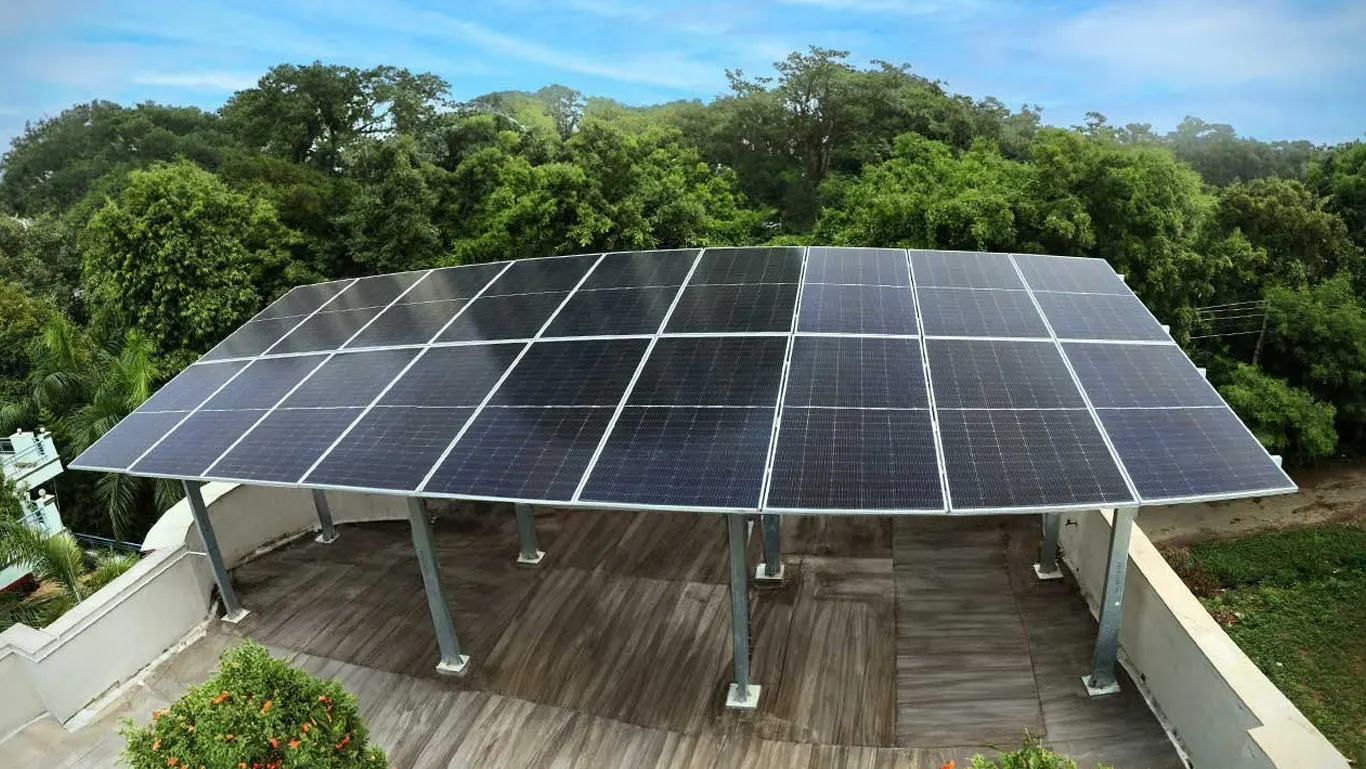
- Roof type and structure. A flat RCC roof, a tin shed or a raised terrace structure each need a different mounting approach.
- Location. Sunlight hours and your state DISCOM process differ across India, which affects both generation and approval time.
How much does the PM Surya Ghar subsidy save you?
Homes get Rs 30,000 per kW for the first 2 kW plus Rs 18,000 for the third kW, capped at Rs 78,000. So a 3 kW, 5 kW or 10 kW home system all receive the same Rs 78,000 from the central scheme, and some states add their own top-up. Housing societies and RWAs get Rs 18,000 per kW for shared facilities up to 500 kW. Commercial and industrial systems do not get the central residential subsidy but still save through lower bills and accelerated depreciation. See our full PM Surya Ghar subsidy guide for eligibility and documents.
How long does solar take to pay back?
For most homes, a rooftop system pays for itself in about 3 to 5 years. After that the electricity is effectively free for the rest of the panels' life, which carries a 25-year performance warranty. Over 25 years a single home system commonly saves several lakh rupees compared with buying the same power from the grid. The exact payback depends on your bill, your tariff and how much you export through net metering.
Does solar reduce my bill to zero?
It can come close for many homes. When your system generates more than you use during the day, the extra units flow back to the grid and your DISCOM credits them against your night-time and cloudy-day usage. This is net metering, and a system sized correctly for your consumption can cut your bill by up to 90 percent.
Frequently asked questions
What is the cost of a 3 kW solar system in India?
Around Rs 1,80,000 before subsidy. After the Rs 78,000 PM Surya Ghar subsidy, about Rs 1,02,000.
How much subsidy do I get on a 5 kW system?
The central subsidy is Rs 78,000 for any residential system of 3 kW or more, including 5 kW and 10 kW. Your state may add a top-up.
How many units does a solar system generate?
As a rule of thumb, 1 kW of rooftop solar generates about 4 units a day in most of India, so a 3 kW system produces roughly 360 units a month.
Get your own price
Every roof and every bill is different. The fastest way to see your system size, subsidy and savings is our free tool. Calculate your solar savings now, or book a free site survey and our team will handle the design, subsidy paperwork and installation end to end. For state-specific pricing, see our guide to solar panel prices in Madhya Pradesh.